MOVEMENT SKILL
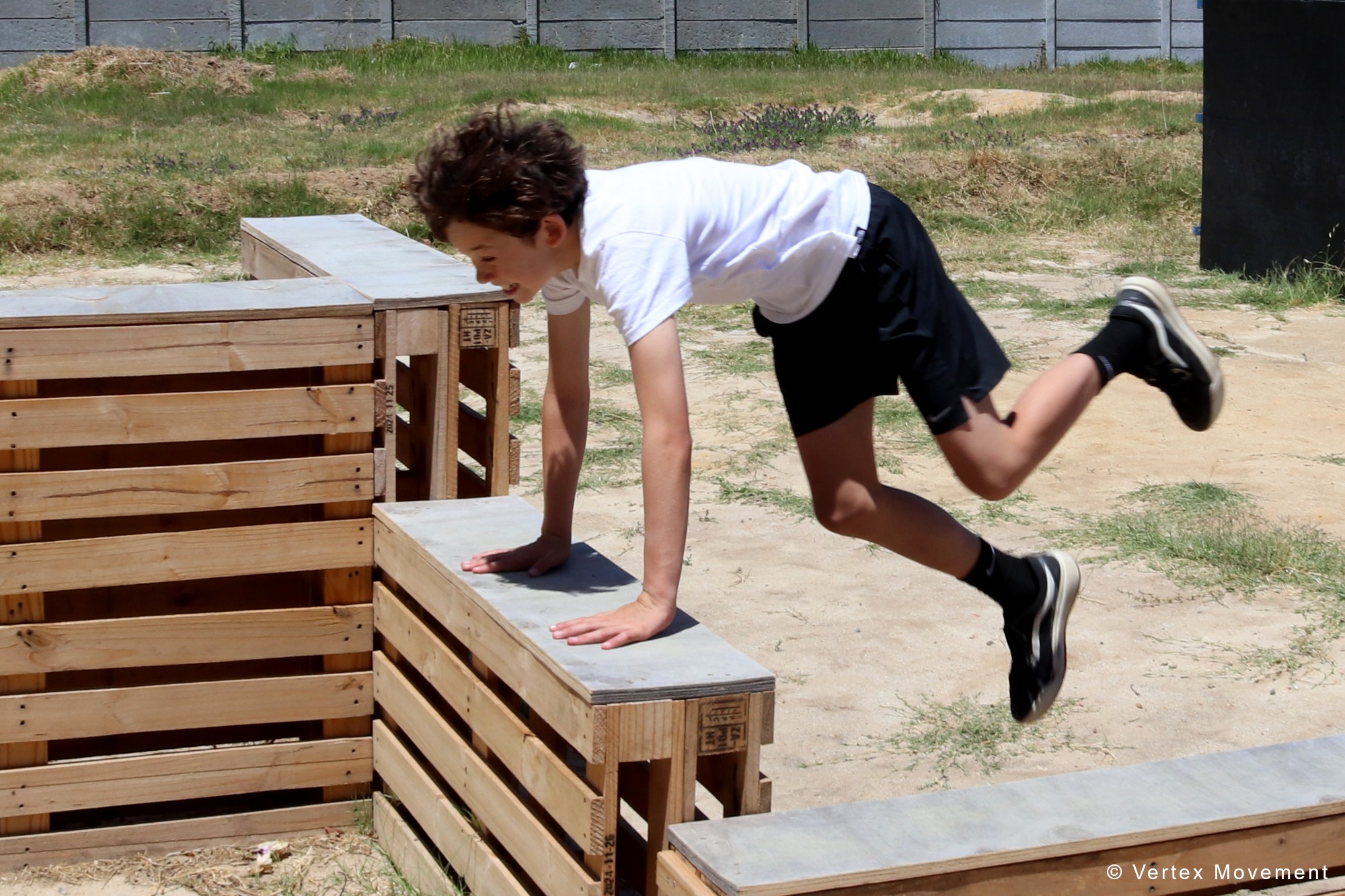
Develop landing, jumping, vaulting, climbing, balance, coordination and body awareness that can be applied in many different environments.


START HERE
Parkour is a movement discipline built around moving through obstacles with skill, control and creativity. Athletes learn to run, jump, land, vault, climb, balance and connect movements together. Good parkour is not about throwing yourself at the biggest obstacle — it is about understanding movement, making good decisions and developing ability step by step.
At Vertex Movement, athletes are not expected to arrive already knowing parkour. We break skills into achievable progressions, build the foundations first and then increase challenge as technique, strength and confidence improve. Coaches can scale the same idea for a beginner who is learning the basics or an experienced athlete who needs a harder variation.
WHY PARKOUR?
Parkour develops physical ability, but the process of learning it also asks athletes to think, adapt, commit and recognise their own progress.
Develop landing, jumping, vaulting, climbing, balance, coordination and body awareness that can be applied in many different environments.
Confidence grows from doing the work: understanding a challenge, practising it, making adjustments and eventually achieving something that once felt difficult.
Parkour is full of choices. Athletes learn to read obstacles, explore different solutions, adapt their movement and think for themselves.
Training is personal, but it happens alongside other athletes. Progress is shared, effort is recognised and athletes become part of a community that enjoys moving together.
THE VERTEX APPROACH
Every session is different, but the coaching process stays consistent: prepare the body, learn movement properly, apply it in different situations and progress when the athlete is ready.
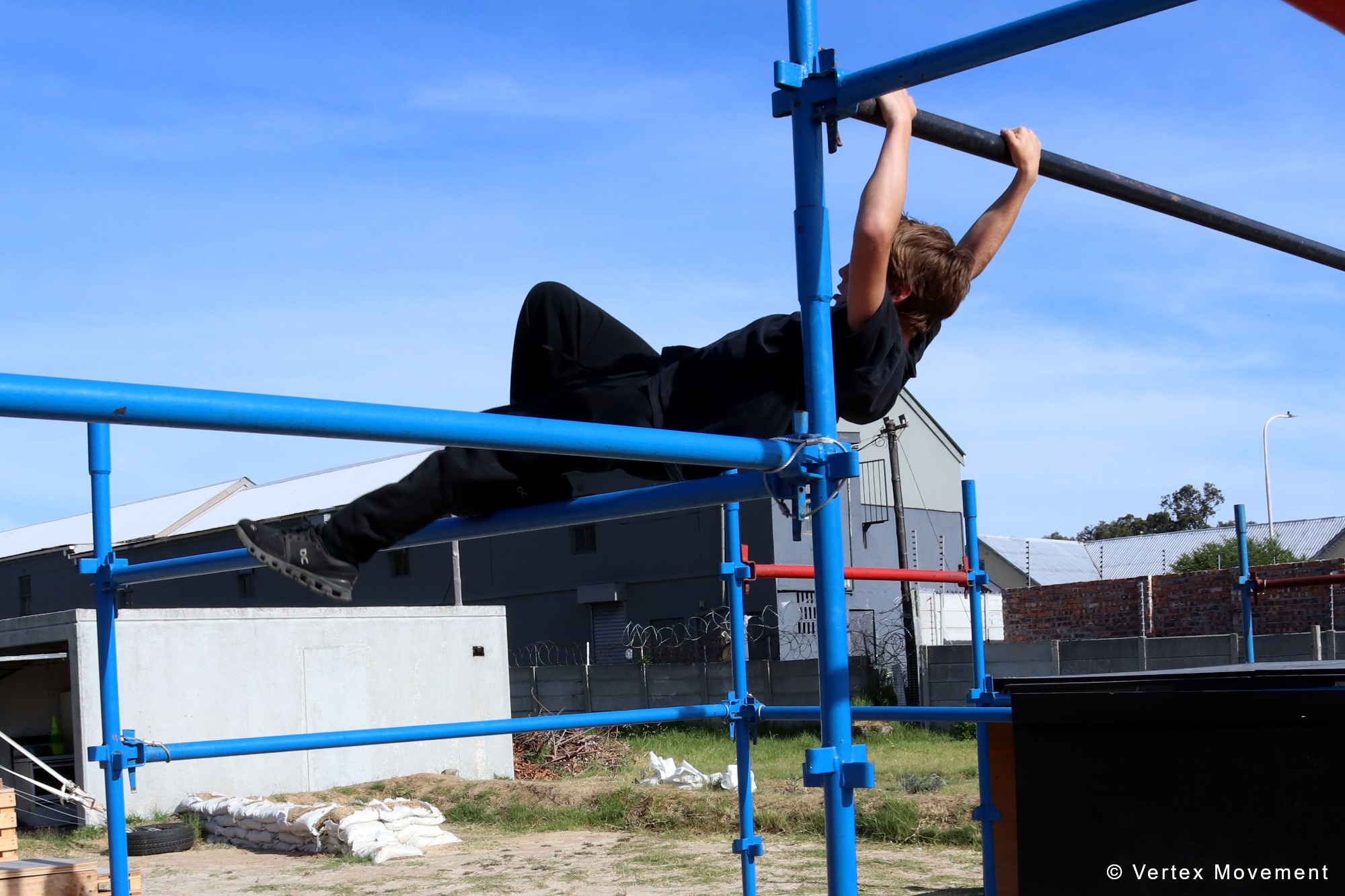
Warm up with purpose, build movement readiness and prepare the joints, muscles and attention needed for the session.
Break skills into clear progressions with demonstrations, coaching cues and enough repetition to understand the movement.
Use skills through stations, challenges, combinations and problem-solving tasks instead of only repeating one movement in isolation.
Increase height, distance, complexity or freedom only when the athlete has the control and understanding to move forward.
PROGRESSION & COACHING
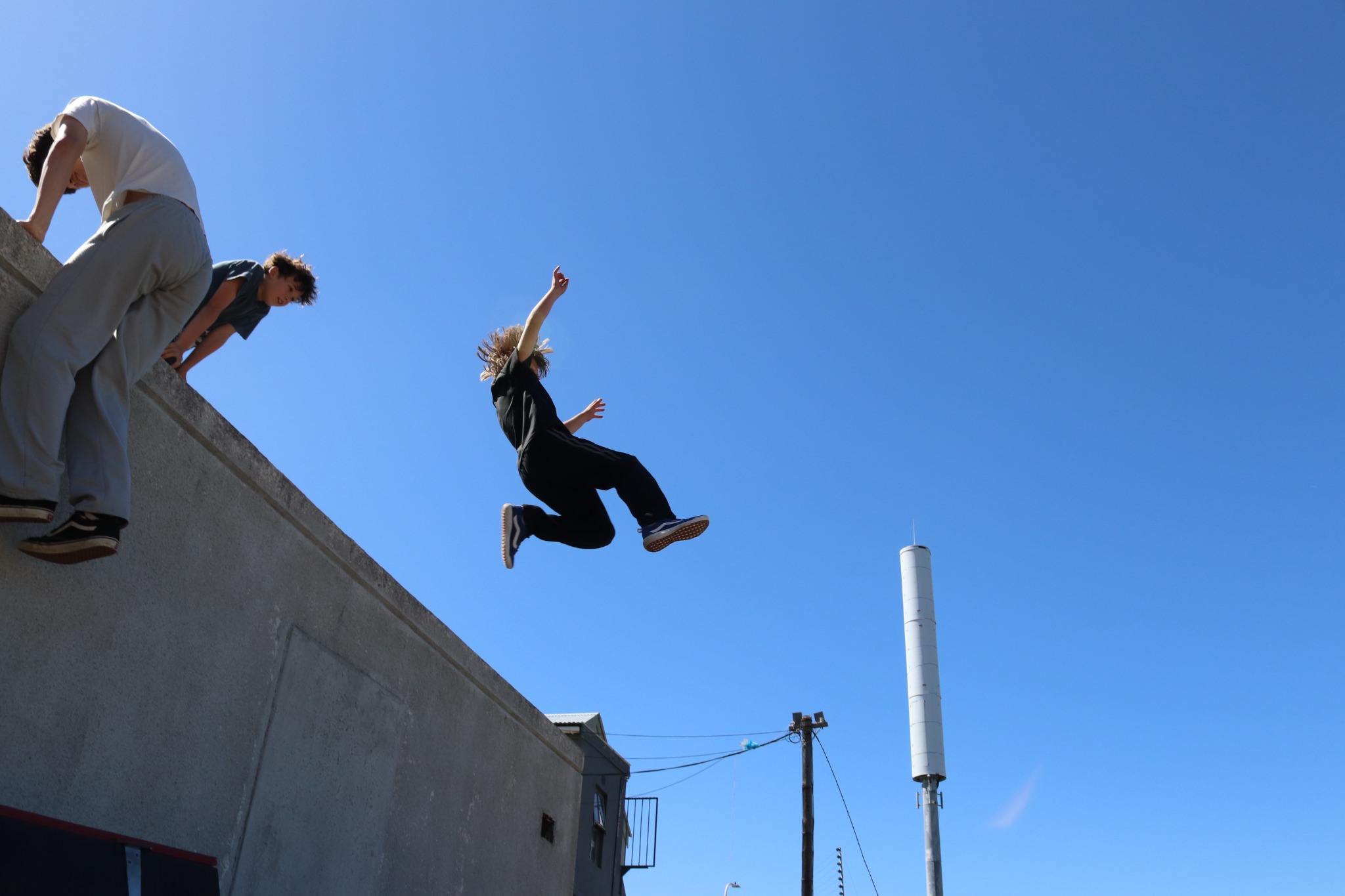
Parkour includes challenge, which is part of what makes it rewarding. Our approach is to manage that challenge through sensible progressions, coaching, appropriate equipment and athlete readiness. We want athletes to understand what they are doing, why they are doing it and when they are ready for the next step.
THE TRAINING PATH
Age groups provide a clear starting point while coaching and challenge can still be adapted to the athlete in front of us.
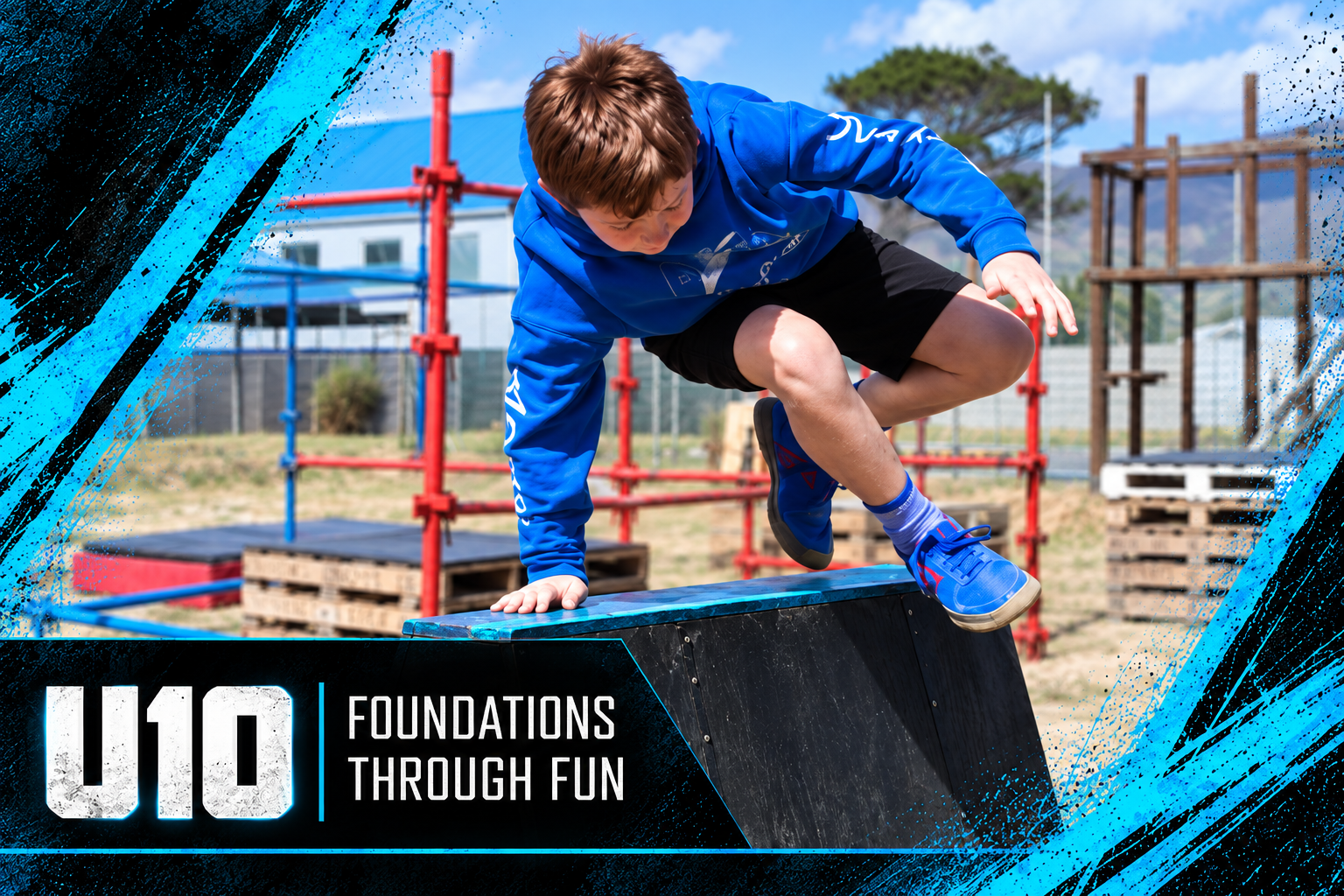
U10 is where strong movement foundations begin. This class introduces younger athletes to parkour through structured, age-appropriate challenges that develop coordination, balance, jumping, landing, climbing, vaulting, spatial awareness and confidence. Training is designed to be engaging and progressive while teaching athletes how to move with control and make sensible decisions around obstacles. Athletes also begin working through the Vertex wristband progression system, allowing coaches to track their individual skill level rather than relying on age alone. U10 is normally the starting group for athletes within this age range, but class placement can be adjusted where an athlete's ability, development or confidence makes another training group more appropriate.
VIEW CLASS →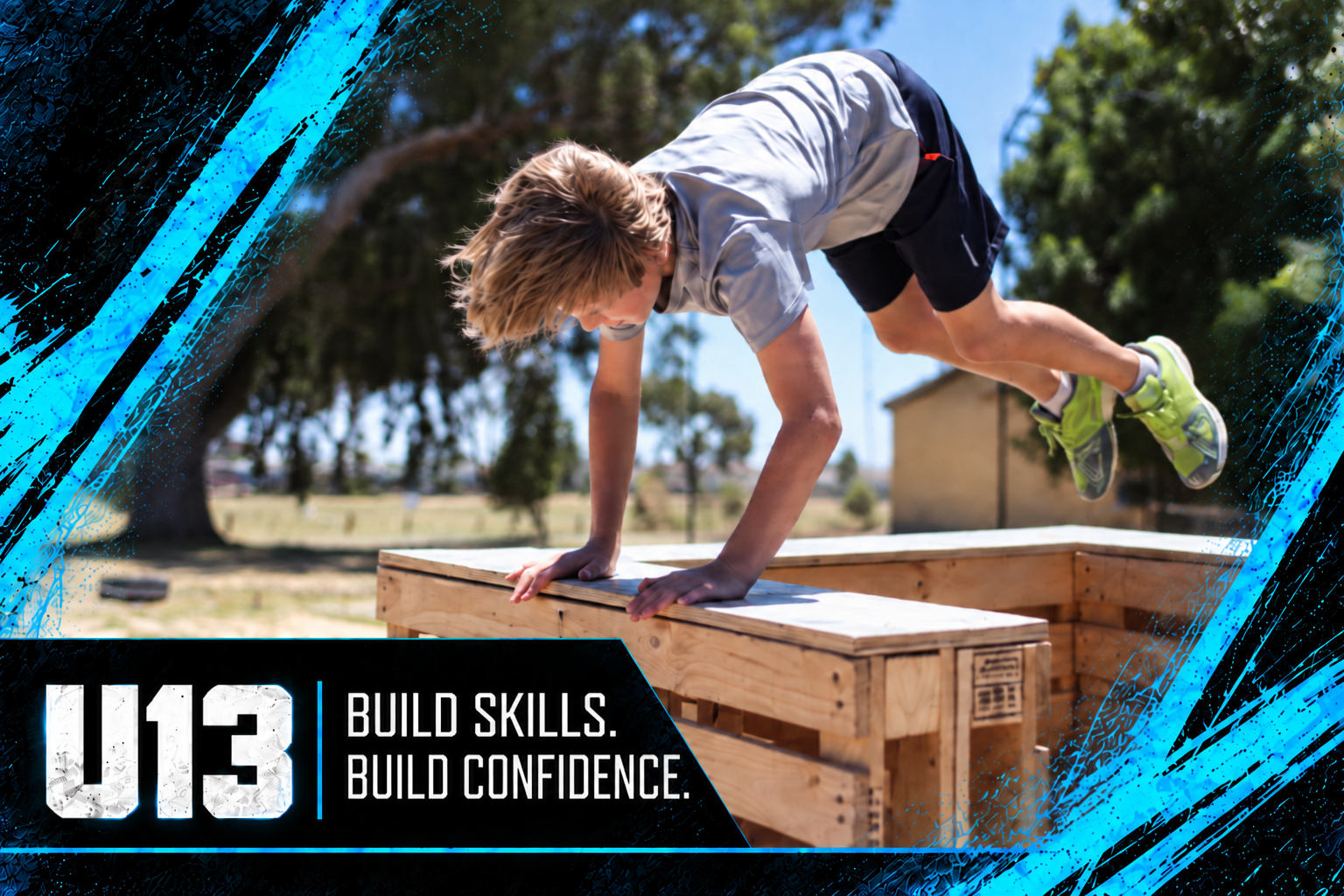
U13 builds on the foundations and develops stronger, more independent parkour athletes. Training becomes more technical and athletes begin combining movements, developing greater power and precision, improving obstacle awareness and learning a wider range of vaults, jumps, climbs, swings, wall movements and introductory acrobatic skills where appropriate. Athletes continue progressing through the Vertex wristband levels, so challenges can be adapted to each athlete's actual ability within the class. Age remains the baseline for placement, but athletes do not automatically move class simply because of a birthday. Coaches may recommend remaining in, moving into or progressing beyond an age group when it provides the best environment for continued development.
VIEW CLASS →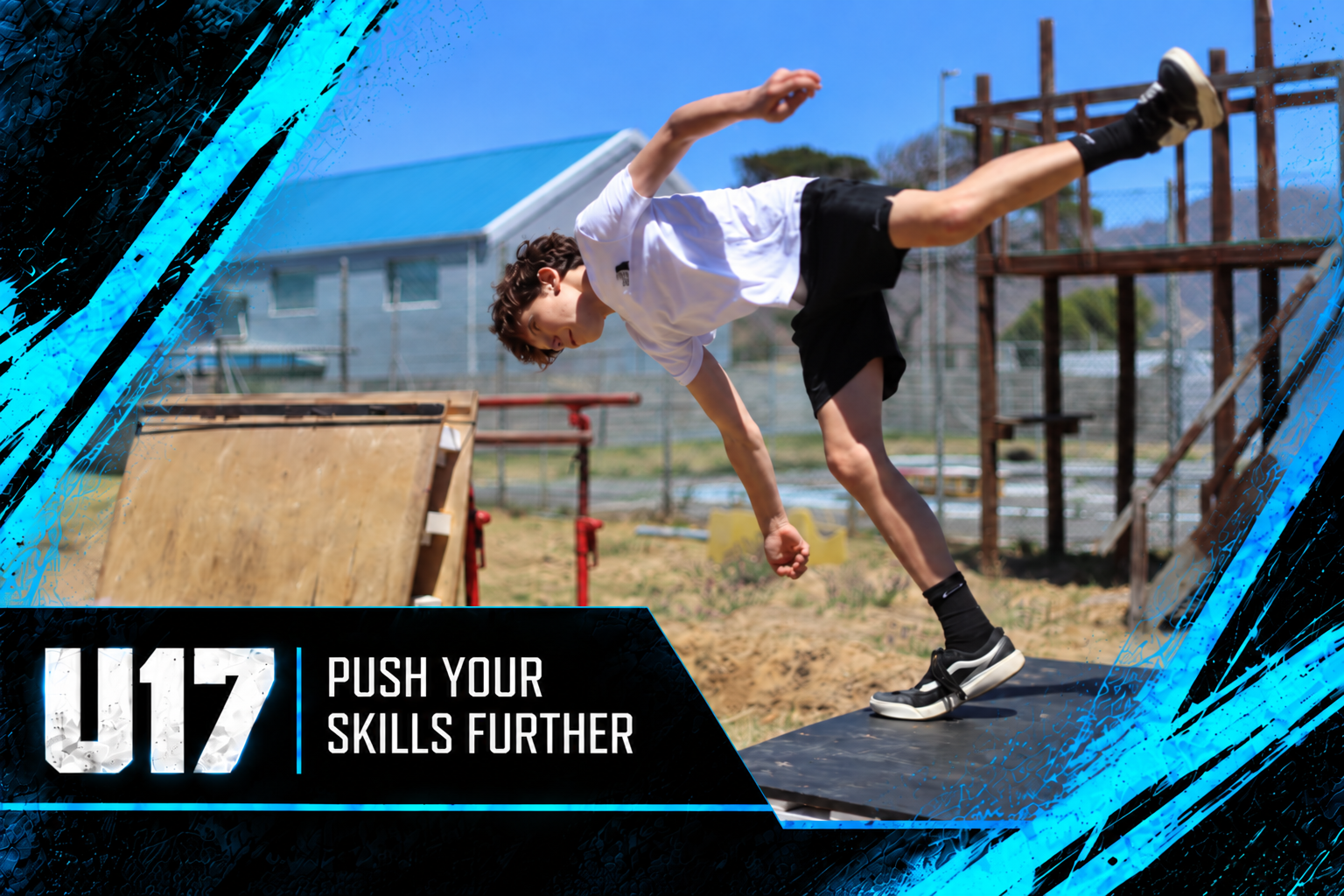
U17 is our advanced youth development environment for athletes ready to take their movement further. Training places greater emphasis on technical quality, strength, power, speed, creativity, movement combinations, advanced obstacle work and more demanding parkour and acrobatic progressions where the athlete is ready. Athletes are encouraged to develop greater independence, understand their own limits and make intelligent decisions about progression and risk. Wristband levels remain an important part of training, meaning athletes can work at significantly different technical levels while still training within the same group. U17 is generally the progression point for older athletes, although final placement is based on the individual rather than age alone.
VIEW CLASS →INSIDE A SESSION
A typical session can include purposeful warm-ups, landing and jumping drills, vaults, climbing, balance work, obstacle courses, movement combinations, skill stations and open problem-solving. Athletes get time to practise, receive feedback and apply what they have learned in different ways. The goal is active learning and real progress — not standing in a line waiting for a turn.
WHO IT IS FOR
Vertex Movement has youth classes organised by age group and development stage. Complete beginners are welcome and no previous parkour experience is required. More experienced athletes are given harder progressions, combinations and challenges so that they continue moving forward instead of repeating the same basics.
EXPLORE CLASSES →YOUR FIRST STEP
Most athletes do not need to “prepare for parkour” before joining. Comfortable training clothes, suitable shoes, a willingness to try and an open mind are enough to start. Coaches introduce the environment, explain the session and help each athlete find an appropriate starting level.
BEYOND THE TIMETABLE
The academy is the core of Vertex Movement, but athletes can also access private coaching, holiday sessions, workshops, jams and special events. These give athletes extra time to practise, focus on specific goals and experience parkour in different formats.
Structured weekly classes focused on skill development, confidence and long-term progress.
Private coaching for focused development, extra support or individual progression goals.
Special training opportunities during holidays with extra movement time and themed sessions.
Community events, workshops and special sessions to keep athletes engaged and growing.
NEXT STEP
Explore the age groups, choose the class that fits your athlete and register through the Vertex Movement member system. If you are unsure where to begin, send us a message and we will help you find the right starting point.
FAQ
Parkour is a movement discipline focused on learning how to move through an environment efficiently, safely and creatively. Athletes develop skills such as running, jumping, landing, balancing, vaulting, climbing and moving over or around obstacles. At Vertex Movement, parkour is taught progressively rather than simply encouraging athletes to attempt big jumps or advanced tricks. The focus is on developing strong movement foundations, control, confidence and good decision-making as an athlete progresses.
Vertex Movement structures youth training through our U10, U13 and U17 groups. The appropriate starting group is primarily based on age starting from 7 years, but coaching level, maturity and current ability may also be considered when necessary. If you are unsure where your child should start, you can still complete the normal registration/trial form and we can help determine the most appropriate placement.
Age determines the main class group, but athletes within the same age group will not necessarily be given exactly the same challenge. Parkour works particularly well with progressive coaching because the same obstacle or movement can often be adapted for different ability levels. A beginner may work on the basic movement pattern while a more experienced athlete works on a more demanding variation.
Comfortable sports clothing that allows unrestricted movement is best. Athletes should be able to run, squat, jump and climb comfortably. Good-fitting sports shoes with reasonable grip are recommended. Very loose clothing, restrictive clothing, jewelry or anything likely to catch on equipment should generally be avoided. Bringing water is also recommended.
Once-per-week training is a good option for athletes who want consistent recreational training or are beginning their parkour journey. Training twice per week provides more practice time, greater exposure to different skills and usually allows athletes to develop more consistently. The best option depends on the athlete's goals, other activities and family schedule. Current membership options are shown on the Classes page.
Parkour can be practiced recreationally or competitively. Many athletes simply enjoy learning skills, overcoming challenges and becoming better movers. Athletes who are interested in competition may also have opportunities to take part in parkour events and disciplines such as Speed, Skill, Flow or Style. Competition is an additional pathway rather than the only purpose of training.
No. Flips are only one small part of the wider movement world and are not what defines parkour. A large portion of training involves fundamental skills such as jumping, landing, balancing, vaulting, climbing, swinging and moving confidently through obstacles. Advanced skills are built on top of these foundations. We would much rather see an athlete perform a basic movement with control and understanding than attempt an advanced skill before they are ready.
There is no single timeline because athletes progress at different rates. Age, training frequency, confidence, physical development, consistency and previous movement experience can all make a difference. Parkour contains hundreds of possible skills and variations, so progression is better viewed as an ongoing process rather than reaching one point where an athlete has 'finished' learning. Consistent training and strong fundamentals are more important than rushing toward advanced movements.